Pharma · Biotech

The complexity of market access
has outgrown its tools.

Bespoke AI tools built around your evidence base, your workflows, your strategy. Fitted by a partner, owned by your team.

The status quo:

  1. 01

    Highly qualified teams frustrated by mundane work and ad-hoc requests, crowding out strategic thinking.

  2. 02

    HTA dossiers assembled manually from fragmented sources, each submission rebuilt from scratch.

  3. 03

    Payer argumentation inconsistent across markets, not learning from past negotiations.

  4. 04

    Critical know-how and relationships tied to team members and hard to scale.

What we believe

Expert teams need
bespoke AI they
own and control

The emerging division of labour is clear: AI wins at speed, scale and granularity. Human advantage lies in understanding nuance, extrapolating out-of-data, foreseeing institutional behaviour and crafting influence.

As off-the-shelf AI gets widely adopted, the bar raises for everyone. AI that creates a lasting advantage is bespoke: fits a team’s strategy, leverages its proprietary data, supports high-stakes decisions – and can be trusted with the most sensitive information.

The cost of building software has collapsed. Market access teams have the most to gain. With the right partner, they can now envision, design and co-create their own AI in weeks, not months.

What does this take? It needn’t be big: a plug-in to your office suite, a small web tool, a program tech-savvy medical writers execute locally. Start small with minimal friction, learn where the value lies, then expand.

Case — Clinical Evidence Interpretation · EU JCA

Accelerating clinical evidence interpretation

Kintiga, a leading pan-European market access consulting firm, recognised that the scope and timelines of the EU Joint Clinical Assessment framework requires a new approach to dossier compilation. Quoting Dr. Lydia Frick: “Let robots do the boring work!”

After a comprehensive workflow assessment, the clinical evidence section stood out as a prime point of AI leverage: highly repetitive work, requiring an almost super-human level of attention to detail and stamina. Semi-automating this work did not only promise significant gains in efficiency, but also much-needed agility when new data cuts arrive just before a deadline.

Together with the Kintiga team of medical writers, we built EPRI, the first-ever AI tool for endpoint result interpretation. With EPRI, medical writers can now compile clinical evidence sections in a fraction of the time, ensure consistency throughout and create a coherent value story.

EPRI — Endpoint Result Interpretation
Demo

01

Reduces writing time by >80%

02

Eliminates data transfer mistakes

03

HTA dossiers compiled in weeks, not months

When we screened every step of the value dossier process, endpoint result interpretation clearly stood out as the ideal point of leverage for AI: a high-volume, highly repetitive, zero-error-tolerance task.

Together with idalab, we have built the first-ever AI tool capable of turning complex endpoint results into convincing interpretations, cutting down manual workloads by more than 60%.

Within weeks, our medical writers couldn’t imagine life without it. All the way from strategy to implementation, idalab has been an outstanding partner: deep-thinking, fast-doing, and never not fun to work with.


Heike Kielhorn-Schönermark Chief Digital Officer

Case — PICO Prediction · EU JCA

Predicting JCA comparators before the submission window

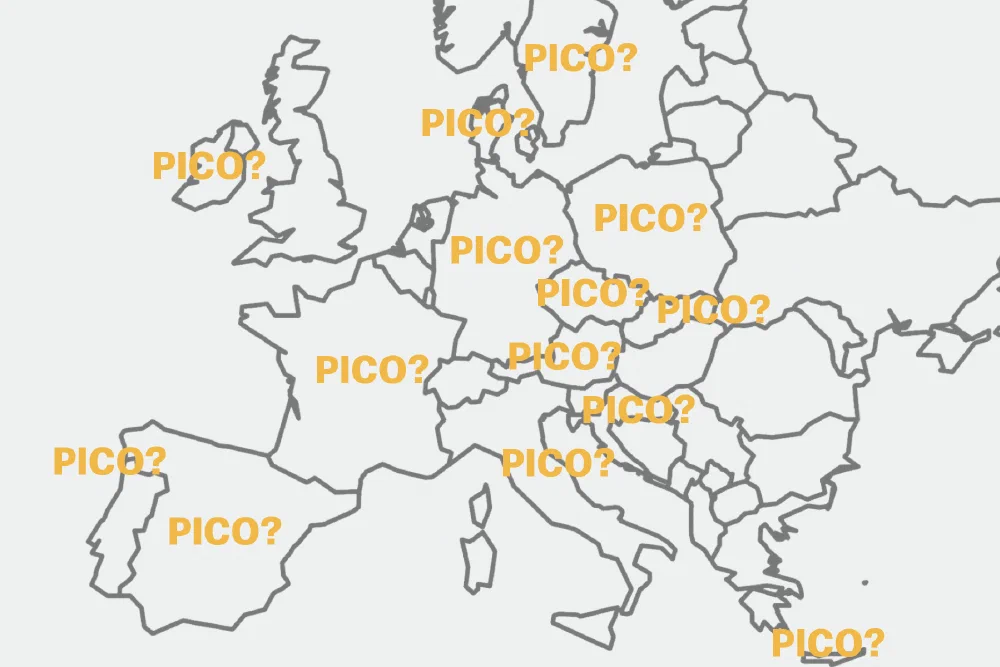
Under the EU JCA framework, the requested PICOs arrive late in the cycle. Teams have to react fast, often without the benefit of seeing how comparator selection will play out across member states.

To get ahead of the cycle, we built a PICO prediction system that takes a label or indication and extrapolates from there — first identifying precedence drugs across European HTA history, then mapping standard of care per country, then synthesising a per-country PICO prediction, and finally consolidating those into the most likely EU-level question.

This does not replace expert analysis and judgement, but it gives them a headstart.

PICO Prediction — Compound Z · Indication X
1 · Precedence drugs 2 · Standard of care 3 · Per-country PICOs 4 · EU consolidation
predicted DICOs
4
consolidated from 8 markets
precedence drugs
11
across 6 NICE / G-BA decisions
model confidence
82 %
vs benchmark of 67%
consolidated PICO components
Population (P) 92
Intervention (I) 88
Comparator (C) 71
Outcome (O) 84
Illustrative interface — final consolidation tab. Per-country predictions converge into the most likely EU-level PICO question. Confidence is highest on Population/Intervention; Comparator carries the most cross-market variance and gets flagged for human review.

01

Cuts response window from weeks to days

02

Surfaces comparators teams might otherwise have missed

03

Allows early-stage scenario planning

How we work

  1. Fitted to your workflows. We love to work closely with your team, going from strategy to first pilot in 6-8 weeks.
  2. Built in your infrastructure. For maximum security and control, we deploy in your technical infrastructure, sealed off from external access.
  3. This is not IT. We share the same mission: bring better drugs to patients faster. We get excited by QALY, PFS, AMNOG and RWE, not neural networks.
  4. You own your AI. Whatever we build is yours, and we're happy to support internal tech teams taking over.

Clients

Roche Arkuda Therapeutics Bayer Biotronik Charité Helios Kliniken HotSpot Therapeutics Kintiga Kymera Therapeutics Matchpoint Therapeutics Schwind eye-tech Sofinnova Partners

Frequently asked questions

Are you a software vendor?
No, we are a consulting partner. While many of our engagements ultimately result in purpose-built software, we do not sell standardized software. That said, we are happy to assist in selecting the right vendor, if applicable.
What does a typical engagement look like?
Strategy (1–4 weeks), pilot (2–4 weeks), fine-tuning (2-week sprints), production-grade engineering (4–8 weeks) and maintenance or operations (ongoing, if needed).
How do you ensure the reliability of the AI?

In market access & pricing, accuracy is critical. Therefore, quality control is an integral part of what we do. To limit errors from hallucinations, we typically apply the following strategies:

  • Constrain the AI to controlled high-quality sources of knowledge (e.g. using retrieval augmented generation)
  • Use large language models for information processing only, not as a source of data
  • Design user interfaces that make it easy to detect and fix errors
Can we train and tweak the AI you built? Is the logic transparent?
Yes, because this is where value of proprietary AI starts to compound. From the very beginning, we involve market access teams in co-designing the systems, so there is no hand-over just continuous improvement.
How to get started?
Unless you have a specific use case you want to pursue, the best way to start is with a strategy workshop to map out existing workflows, bottlenecks, opportunities.

Upcoming Webinar

AI for Market Access:
A Practical Perspective

June 18

A practical perspective on how AI is changing market access and pricing work. 20 minutes presentation followed by 10 minutes Q&A.

  • Two real case studies under the hood (impact, lessons learned, architecture)
  • Success factors and common pitfalls
    • Technical, process, organization, legal and compliance
    • Use case map 2026
    • How to navigate buy vs build
  • The SaaS Apocalypse and the new world of software: why market access and pricing teams have most to gain

Contact